Exclusive event technology and visual design
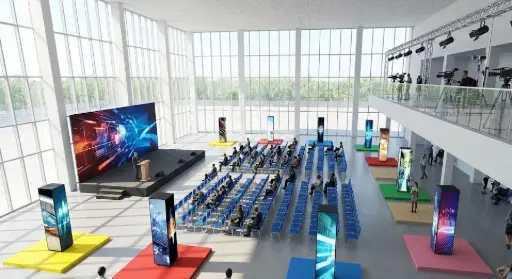
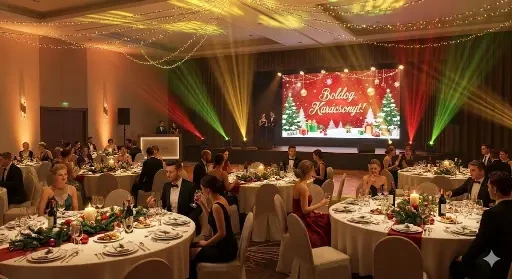
The visual designer often determines the visual success of the event; a poorly designed visual can easily disrupt the day's schedule. Therefore, it is worth precisely defining the scope of work, including the details of rental and execution, before requesting a quote. A good designer provides production-ready materials: photorealistic renders, panoramas, and architectural visualizations that expedite decision-making and reduce risk.
Key event technology lessons, events, and services
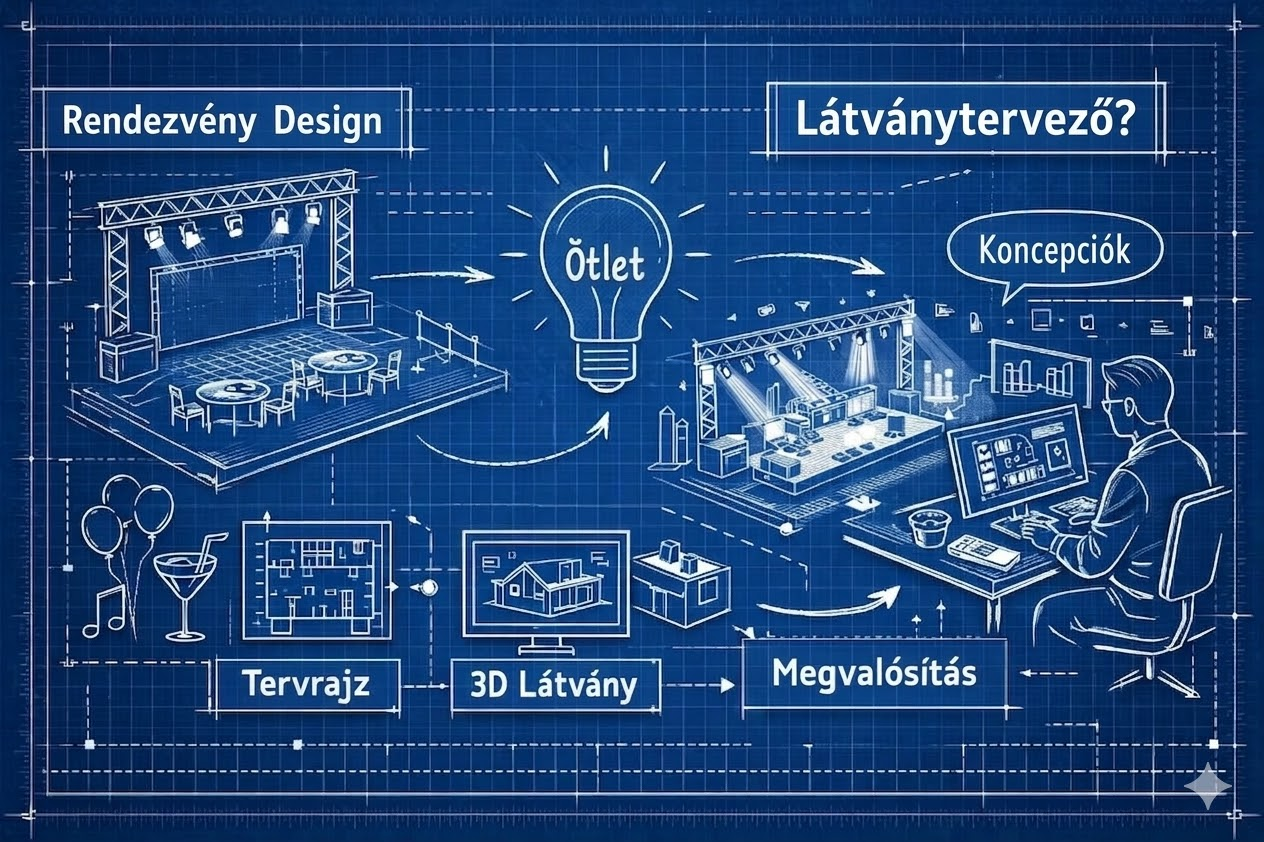
- Request a 3D preview: a photorealistic render or short animation provides a realistic picture of the final result; for production projects, also request the source models and textures.
- Define the scope, especially in terms of lighting and sound.: a detailed package description and the number of revisions allow for comparison of quotes and reduce on-site surprises, taking special requirements into account.
- LED wall parameters: specify pixel pitch, resolution, and camera views to ensure the preview matches the actual output.
- Milestones and rehearsals during your projects: a fixed run sheet, cue-to-cue management, and at least one full rehearsal ensure a smooth show.
- Redundancy and support: choose a team that provides standby support and backup equipment, so technical failures do not stop the event.
What does a good visual designer do?
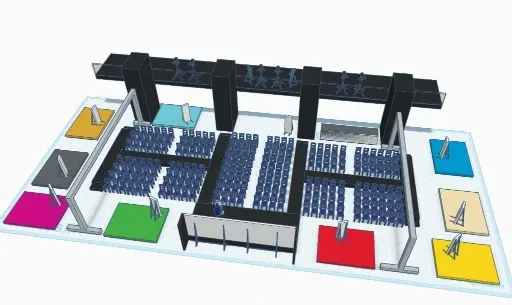
A professional visual designer transforms the visual concept into specific, manufacturable plans that can be utilized by the production and operational team. The work typically begins with a detailed brief and clarification of site data, followed by photorealistic renders and previsualizations tailored to the event's needs. Early technical discussions shorten decision-making time and reduce on-site risks.
The most common deliverables include: 4K still images (PNG/JPG), short MP4 animations, 360 panoramas, and interactive previsualization exports. For production projects, request the source models (FBX/OBJ/GLTF) and textures (PNG or TGA). If the production requires precise camera positions and installation measurements, the transfer of 3D files is essential. More details on the variousfile formatsand their characteristics.
For events, LED wall previsualization is particularly important: provide the physical dimensions, pixel pitch, panel resolution, and planned camera views. Only then can the previsualization reflect the actual output, and the production can accurately set up on-site, taking into account the specific audiovisual requirements. A simple run sheet or cue sheet for cue-to-cue rehearsals aids in a smooth handover.
What exclusive service packages does a visual designer offer?
You will generally encounter three levels: basic, advanced, and comprehensive packages. It is important that the package description details the deliverables, deadlines, and number of revisions, making it easier to compare offers among services. A clear scope reduces the likelihood of hidden costs.
The basic package often includes a mood board, material and color suggestions, as well as 1-2 photorealistic 4K images; this is suitable for quick approval but does not necessarily provide source files usable for production. The advanced package typically offers 3D previews, multiple camera views, and short animations, as well as 360 panoramas, taking into account the technical requirements of the event. The comprehensive package includes 3D files intended for production, LED mapping outputs, a detailed run sheet, and cue-to-cue rehearsal support.
How long does it take and how much does it cost? Prices and deadlines.
For informational purposes, consider the following price ranges in the Hungarian market: simple still image 40,000–120,000 HUF, photorealistic interior 120,000–350,000 HUF, short animation 200,000–450,000 HUF, while a complete event package starts at 500,000 HUF. These prices are project-specific; custom modeling or urgent deadlines can easily double the amount. A detailed brief is always necessary for accurate pricing. You can find a detailed price comparison guide in theevent design prices 2025 Budapestarticle.
- custom modeling and complex geometry in the field of event technology
- high resolution and multiple material variants in the field of decoration and lighting technology
- multiple camera views or longer animations
- VR/360 integration and interactive exports
- urgency, accelerated deadlines
- many revisions and extensive change rounds during productions
For urgent fees, a surcharge of +20–50% is typical if you significantly shorten the lead time. Revisions are usually included in the price for 1–2 rounds, with additional rounds appearing as hourly charges, taking into account the complexity of the execution. Pay attention to licenses: promotional, printed, or time-limited use may incur additional charges in the contract.
What to request in the technical proposal: detailed brief and mandatory deliverables
The basis for an accurate, comparable quote is a detailed brief that takes into account the needs of the events. Provide the event date, venue address and dimensions, stage dimensions, physical dimensions of the LED wall, pixel pitch and resolution, as well as the planned camera arrangement. Attach the brand guidelines and reference images, as the visual designer cannot provide a realistic price without them.
Specify the expected formats in advance: 4K still images PNG/JPG, 4K videos MP4 H.264 or H.265, source 3D files FBX/GLTF/OBJ, and editable PSD files with textures. Provide the color profile, gamma values, any LUTs, and file naming conventions to avoid conversion issues during production. Useful reading about the world of event technology.video and graphic files in event planningpractical summary created.
In the contract, specify the number of revisions, milestones, and payment schedule, as well as the scope of usage rights (non-exclusive, worldwide, perpetual, or time-limited license). Be aware of warning signs: vague delivery descriptions, unlimited free revisions, or the absence of source files pose risks. Attach this list to the brief to receive simpler and more comparable quotes.
10 questions and checklist for the request for proposal
This questionnaire makes it easy to compare offers quickly and ensures that the information needed for decision-making, including details of execution, is available. Copy it into the email or brief, so you don't have to rephrase what to ask every time.
- References: request high-resolution event visualization or actual completed references.
- LED experience: have they worked with LED walls and animations optimized for multi-camera streaming?
- Output formats: what preview and export formats do they produce (render, MP4, 360°, FBX/GLTF/OBJ), and what audiovisual elements do they use?
- Deliverable details: specify exact resolution, codec, color profile, gamma, and any LUTs.
- 3D source handover: will they provide the source models, textures, and documentation (version control), as well as any special audio requirements?
- LED specifications: will they provide the pixel pitch, physical size, panel resolution, and camera views from a lighting perspective?
- Revisions and costs: how many free revisions are there, and what is the additional cost per round?
- Deadlines and milestones: clearly define the submission, first preview, finalization, and payment schedule for the events.
- Support and backup: do they provide standby show-day support, backup workflow, and rush deadline guarantees?
- License and rights: what copyright and usage restrictions apply to the work?
With this template, you can quickly review offers and filter out non-comparable ones. The following section describes how you can score incoming responses for evaluating event-related services and provides practical examples for decision-making.
How does Alternative Design And Media work, examples and sample process
The workflow of Alternative Design And Media is clear and step-by-step: detailed brief, previsualization, technical consultation, handover for production, and cue-to-cue rehearsal. Early technical consultations reduce unexpected costs and shorten the on-site setup time. The team focuses on production-friendly materials and documentation so that technicians can start working immediately.
The purpose of our delivered materials is to enable our technicians and operators to quickly and flawlessly build the show. Our typical package includes: 4K stills, 4K MP4 animations, FBX and OBJ exports, textures, cue-to-cue run sheet, and LED mapping exports. This package reduces communication errors and speeds up the build process, which is essential for multi-camera streaming in the event technology field.
How to decide who should be the event's visual designer?
In making the decision, look at the previews, check the milestones and rehearsal management, and choose the team that offers standby support and redundant systems for the show day. The service packages quickly show who offers full implementation and where a separate technical partner is needed, including exclusive audiovisual solutions. A well-structured brief and targeted questions significantly reduce the chances of errors.
Send the detailed brief to a few selected providers, compare the offers, and request reference materials; this will result in a quick and risk-free decision. If you wish, send the event brief and floor plan to theAlternative Design And Mediateam, and we will provide a transparent package proposal and an initial draft with a time estimate.